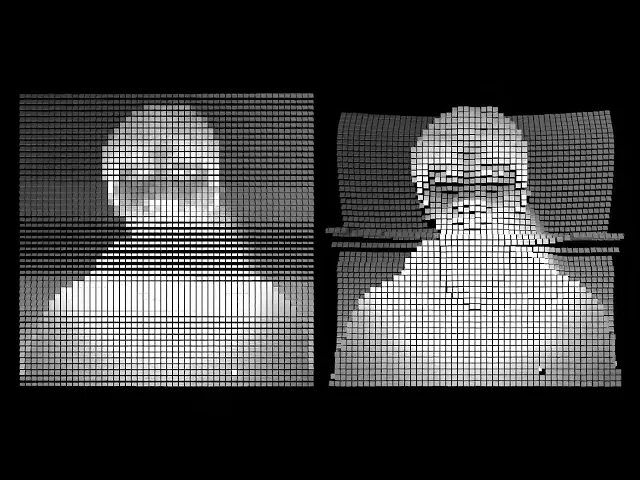
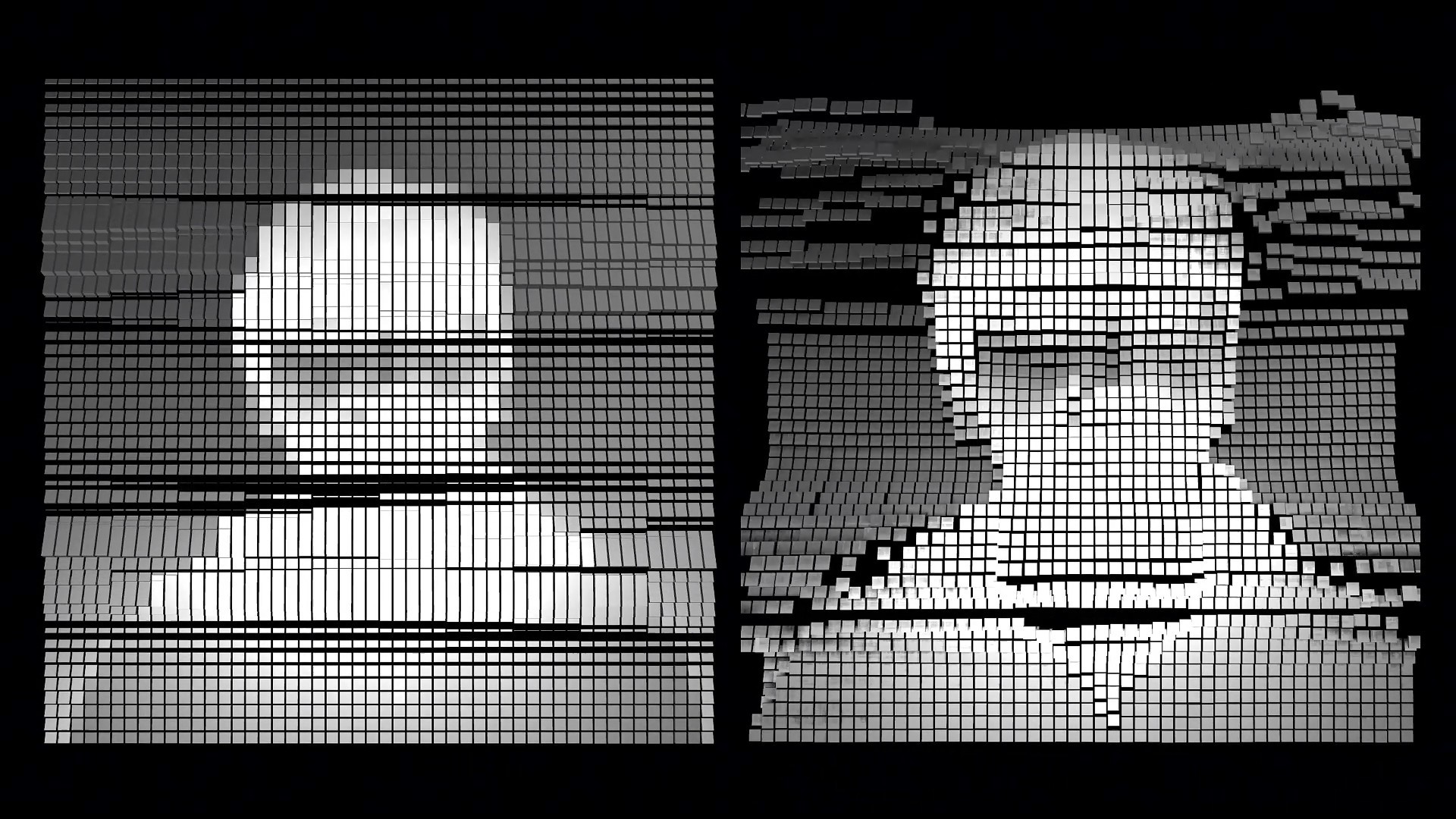
Alienated Self begins from a daily doubt: when content appears exactly when we “want it,” are our desires truly ours—or system-predicted outcomes? The work externalizes this loss of control by creating a space where the “cracks of identity” become visible, not resolved.
Trigger: The Algorithmic Gaze
In the attention economy, each click, pause, and linger becomes data. Over time, the system doesn’t just recommend—it anticipates, nudges, and quietly scripts behavior. Alienated Self treats this as a psychological condition: you are always “choosing,” yet always responding to prearranged bait.
Spatial Setup: Between Two Screens
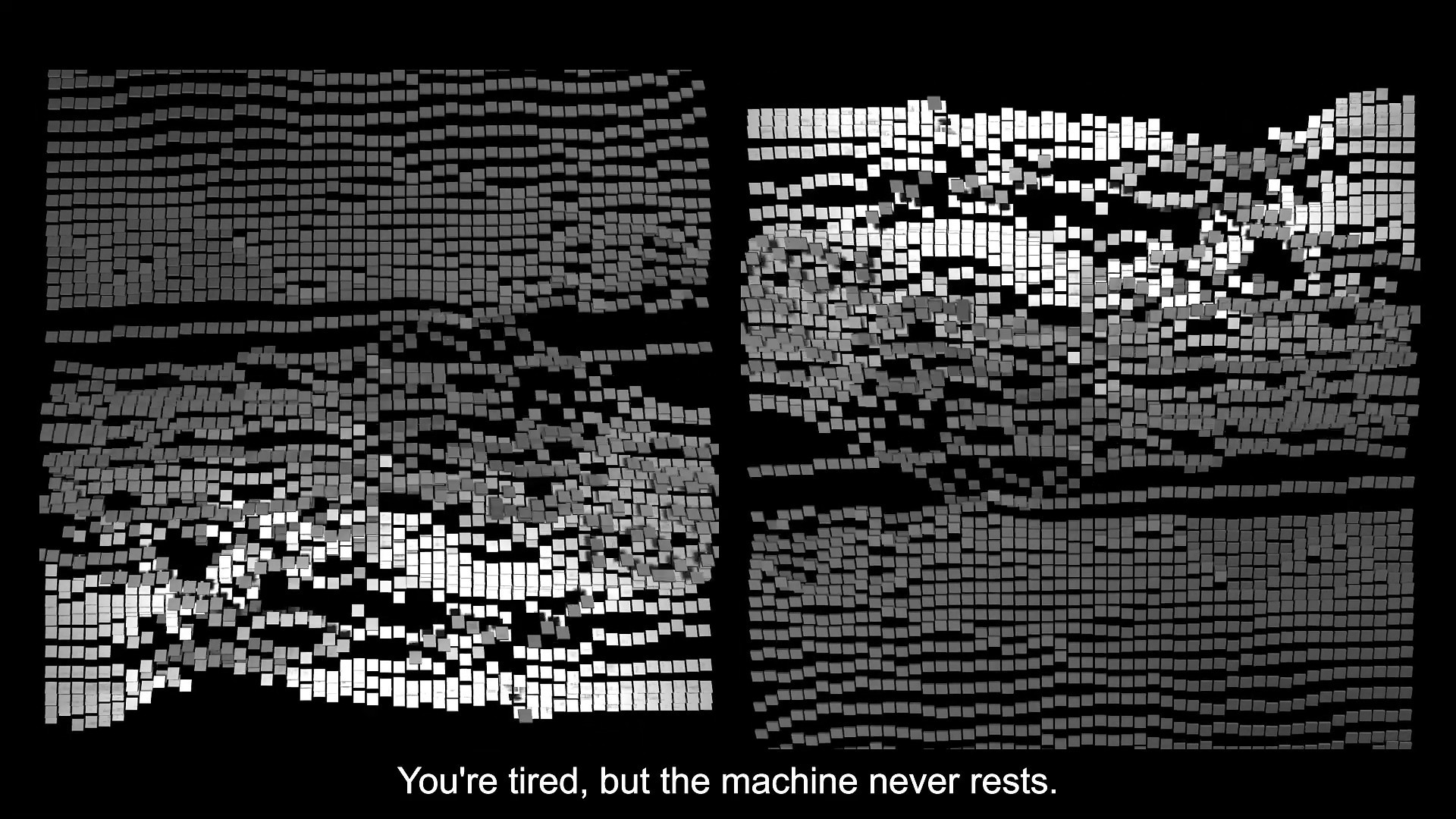
The audience stands between two screens, becoming both viewer and variable. The installation refuses a single stable “self-image.” Instead, it constructs a structure of fractures—deviations, blurriness, repetition, and disruption—so the act of watching becomes a confrontation with being watched.
Visual Language: Real Captures vs Data Shadows
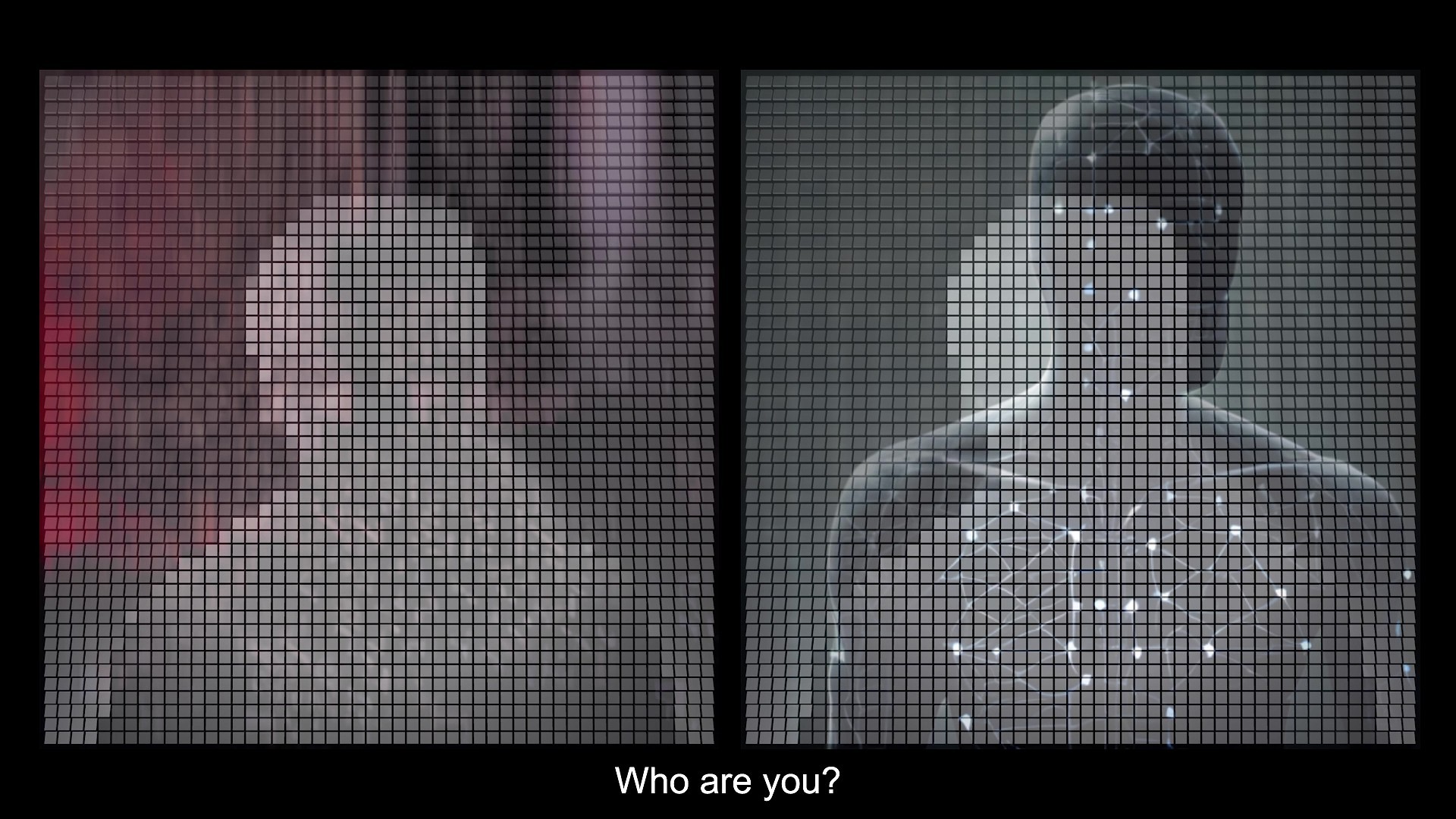
The images shift between real captures and data shadows, often hovering in-between. What appears may be you, a predicted value, your past self, or an extracted outline—never fully confirmable. The work replaces the question “Who are you?” with the challenge: “Have you been defined?”
The “Fourth Screen”: Language as Interference
Language is not narration. It functions as rhythmic “noise”—interruption and counter-gaze—resisting the smooth flow of images. Text becomes an active disturbance that breaks passive consumption and exposes the system’s framing power.
The project includes experiments and technical integration around real-time image generation and installation structure, including Stream Diffusion in TouchDesigner and iterative screen-configuration development (from multi-screen approaches toward a more focused two-screen gaze).
Outcome
Alienated Self offers no answers—only a perceptual space where algorithmic identity becomes visible as fragmentation. For the artist, it is an externalization of anxiety about growing up inside technology, and a doubt about whether the “self” can still exist under prediction.