Individual Project / Service Design & Urban Strategy
2025
Individual Project / Service Design & Urban Strategy
2025
Context: Why Logistics Needs a New Path
Heavy-duty freight sits at a difficult intersection of high emissions and fragile livelihoods. Electrification remains hard to scale for long-haul routes (range and infrastructure limits), while drivers face falling rates, rising fuel/maintenance costs, and frequent emission penalties that feel more like punishment than solutions.
Flowing Energy starts from a practical question: can decarbonization happen in motion, using the truck itself as the capture platform—without depending on fixed clean infrastructure?
Real Voices: Driver Pressure (User Research)
Interviews revealed a repeated pattern: drivers are asked to carry the burden—financially and morally—while having limited agency to change the system.
“Freight rates dropped… a trip barely covers costs.”
“Costs keep rising while profits shrink; it’s becoming unsustainable.”
“Emission checks feel like fines… no one tells me how to fix it.”
Design direction from research: any climate solution must also create direct, tangible benefits for drivers, or adoption will fail.
Core Idea: Mobile Biological Reuse
Flowing Energy proposes a decentralized energy symbiosis:
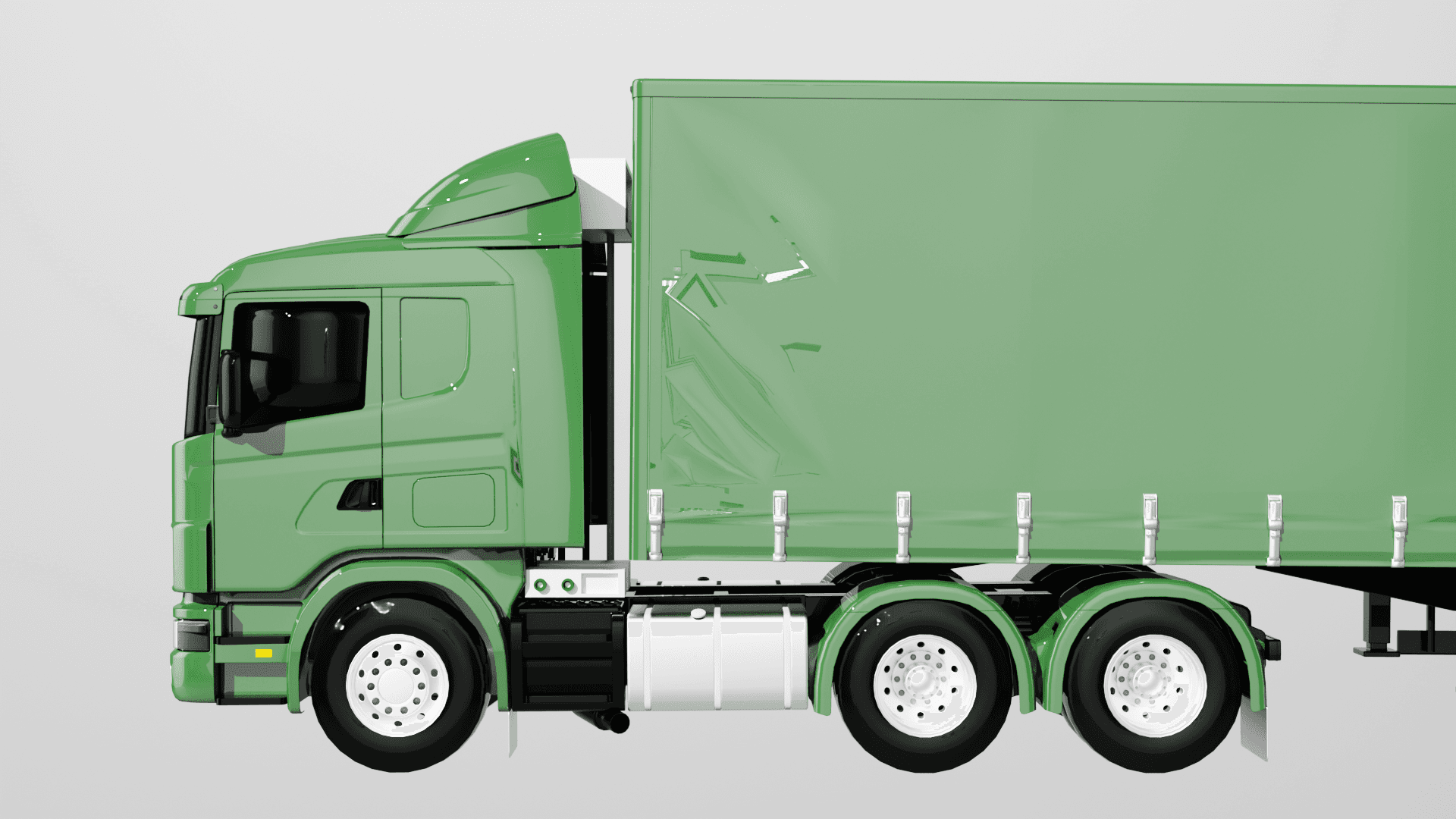
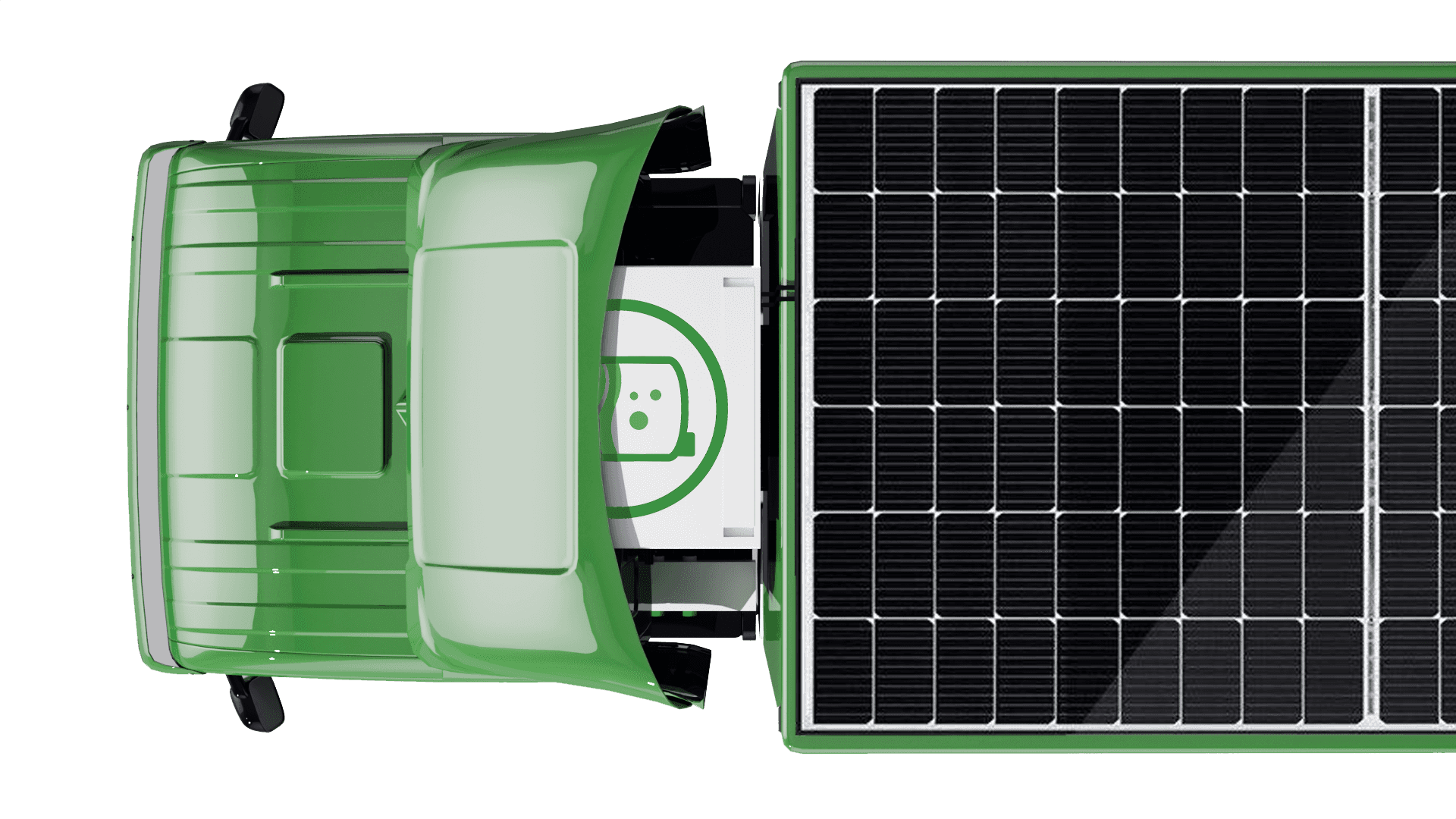
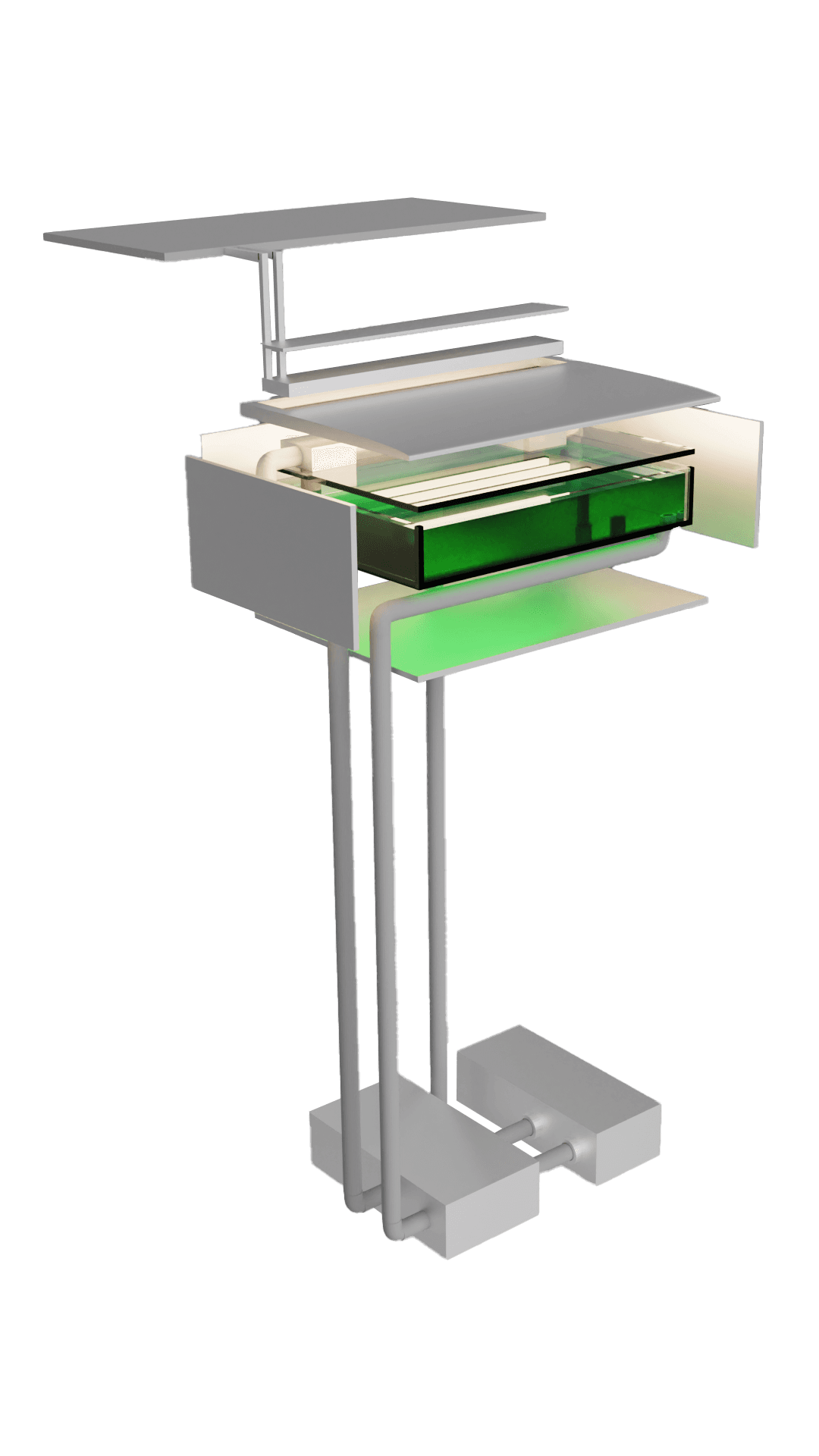
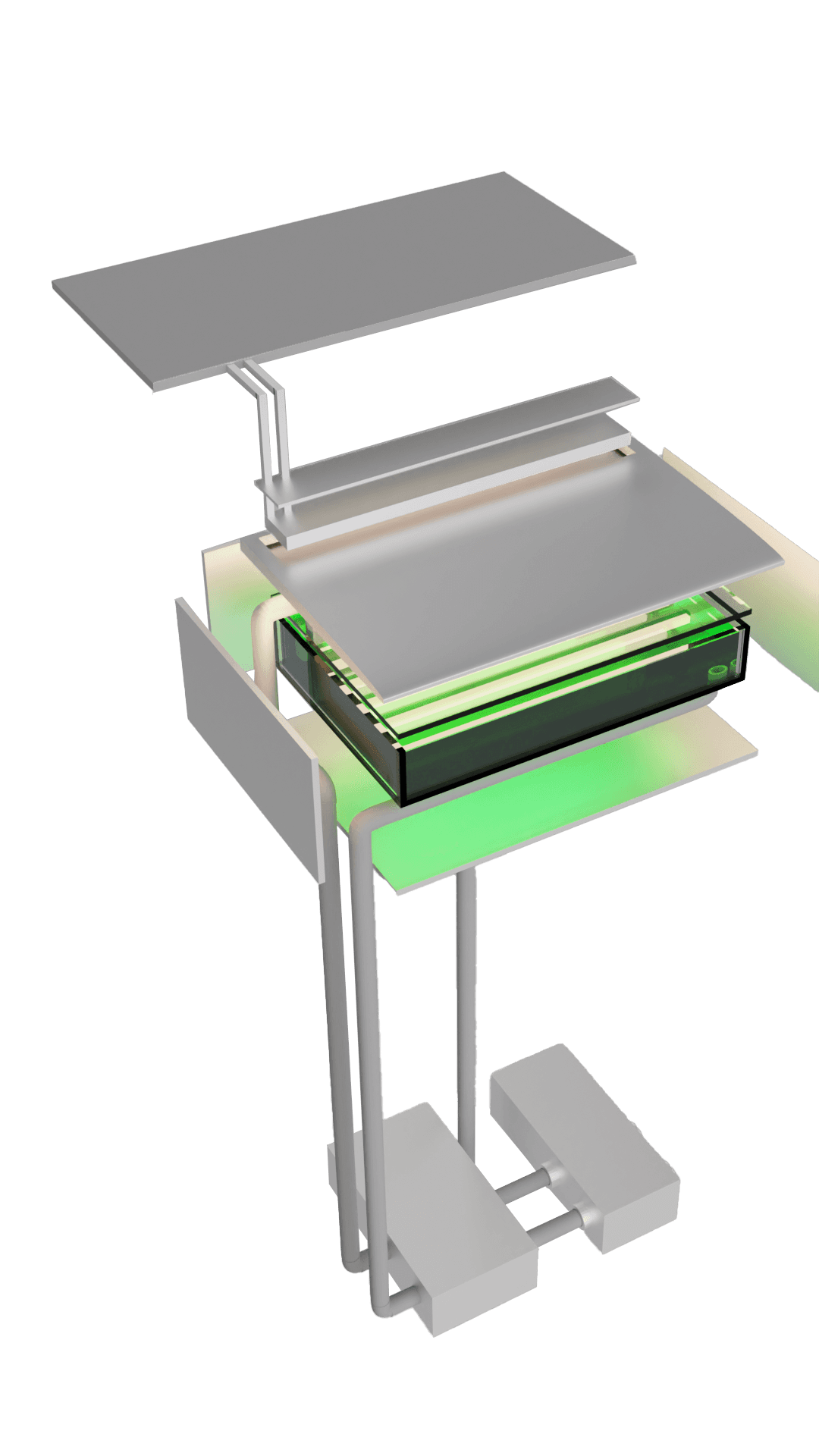
Truck retrofit: modular microalgae photobioreactors mounted on the truck (roof/side), connected to the exhaust line.
In-motion inputs: tailpipe CO₂ and waste heat become nutrients for photosynthesis during driving.
Circular outputs: harvested biomass can be processed into biofuel (and other byproducts), turning emissions into usable energy.
Instead of treating CO₂ as waste to remove, the system treats it as a resource to grow.
Design Question
How might we achieve environmental impact and income stability at the same time—without increasing operational burden for drivers?
System Architecture: Truck × Algae × City × Driver
On-truck capture + growth
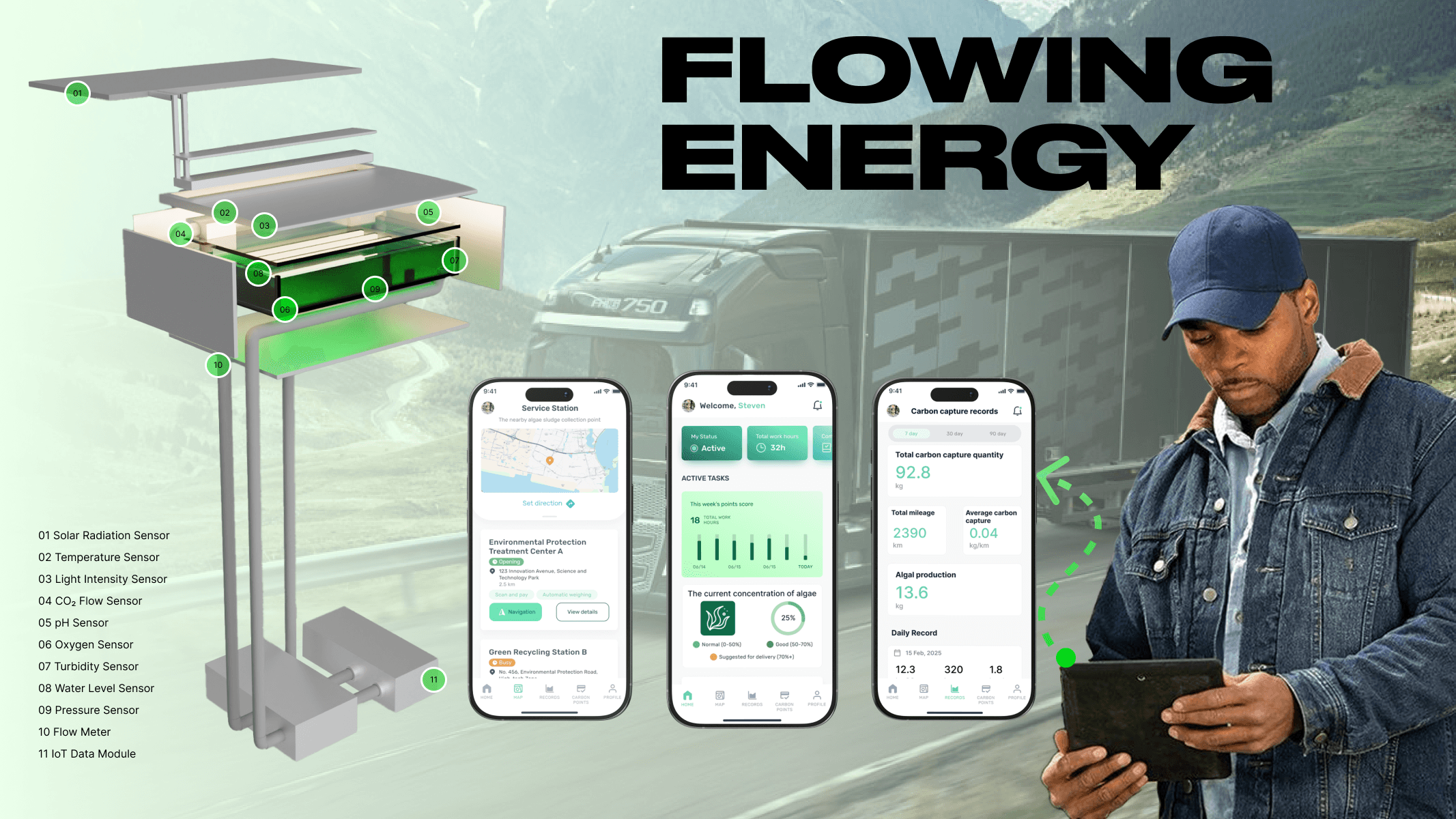
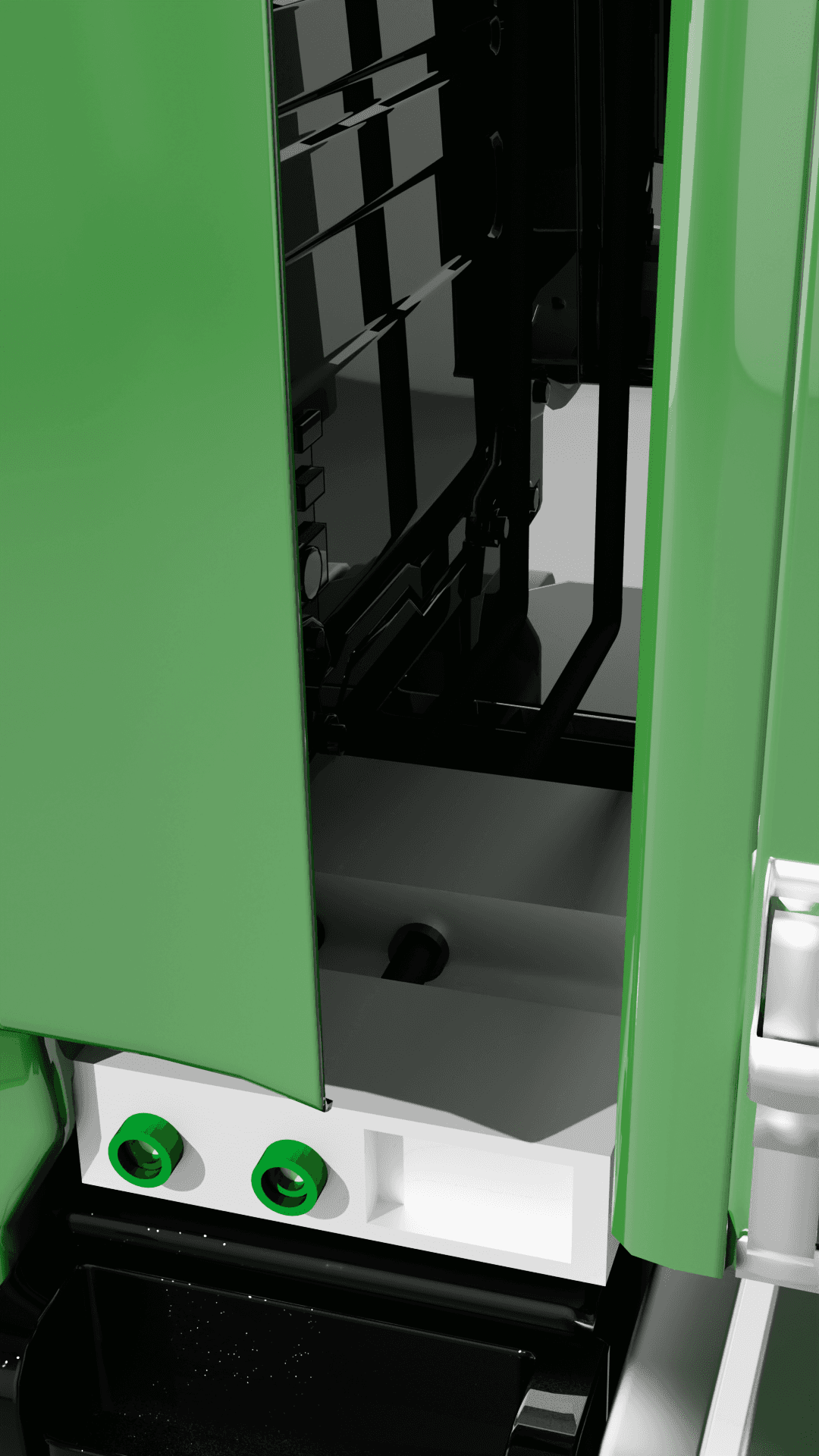
CO₂ inlet from exhaust, transparent PBR chamber for light and gas exchange
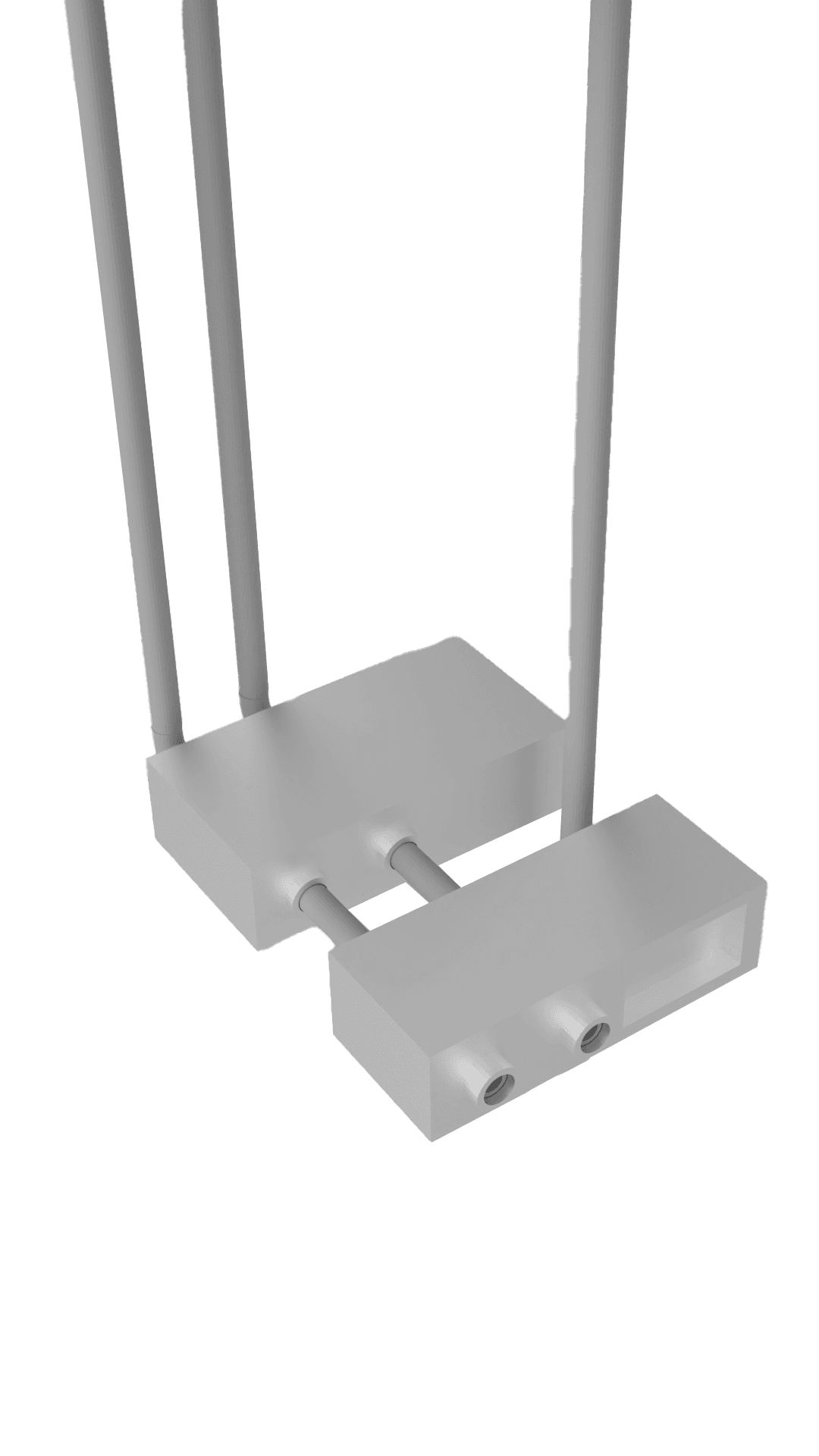
temperature/lighting support, nutrient circulation for refilling and harvesting
smart monitoring (pH, oxygen, turbidity, pressure, water level, flow, CO₂)
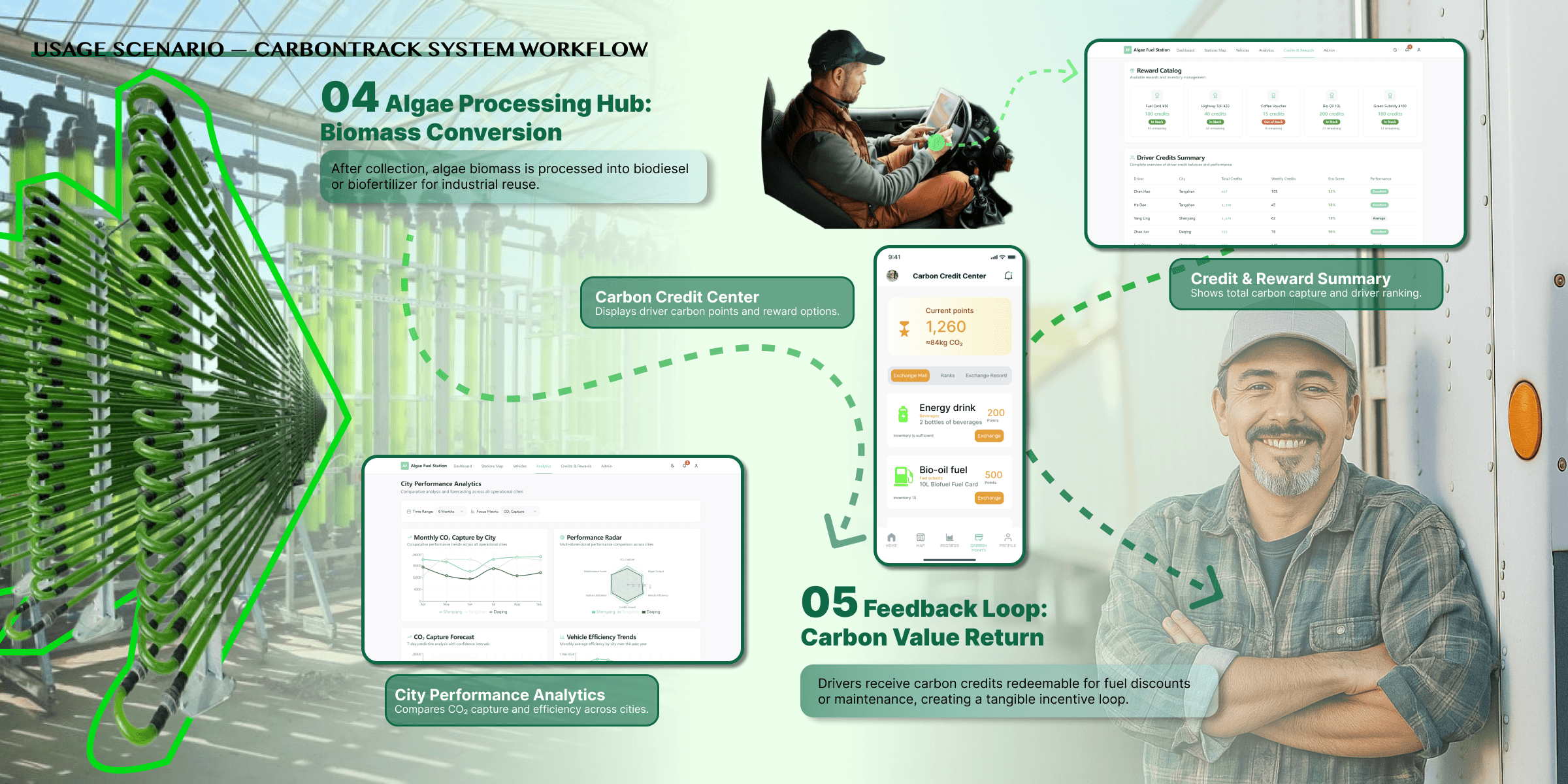
Urban processing hubs (industrial reuse) Abandoned industrial buildings become algae processing nodes—converting biomass into biodiesel/biofertilizer and returning value to the network.
CarbonTrack platform (value + coordination) A data-driven service layer that tracks capture and growth, coordinates stations, and turns verified impact into carbon credits.
Prototype & Experiment (What I Tested)
To explore feasibility for a truck-mounted algae system, I ran an early growth experiment comparing vessel geometries under simulated “mobile conditions.”
Setup (7 days):
vessels: one square transparent box + six test tubes
CO₂ simulation: 8h/day via tubing
daily shaking to mimic vibration
metric: dry weight (DW) growth efficiency
Why it matters: it grounded the design in measurable cultivation behavior before scaling to a full on-vehicle prototype.
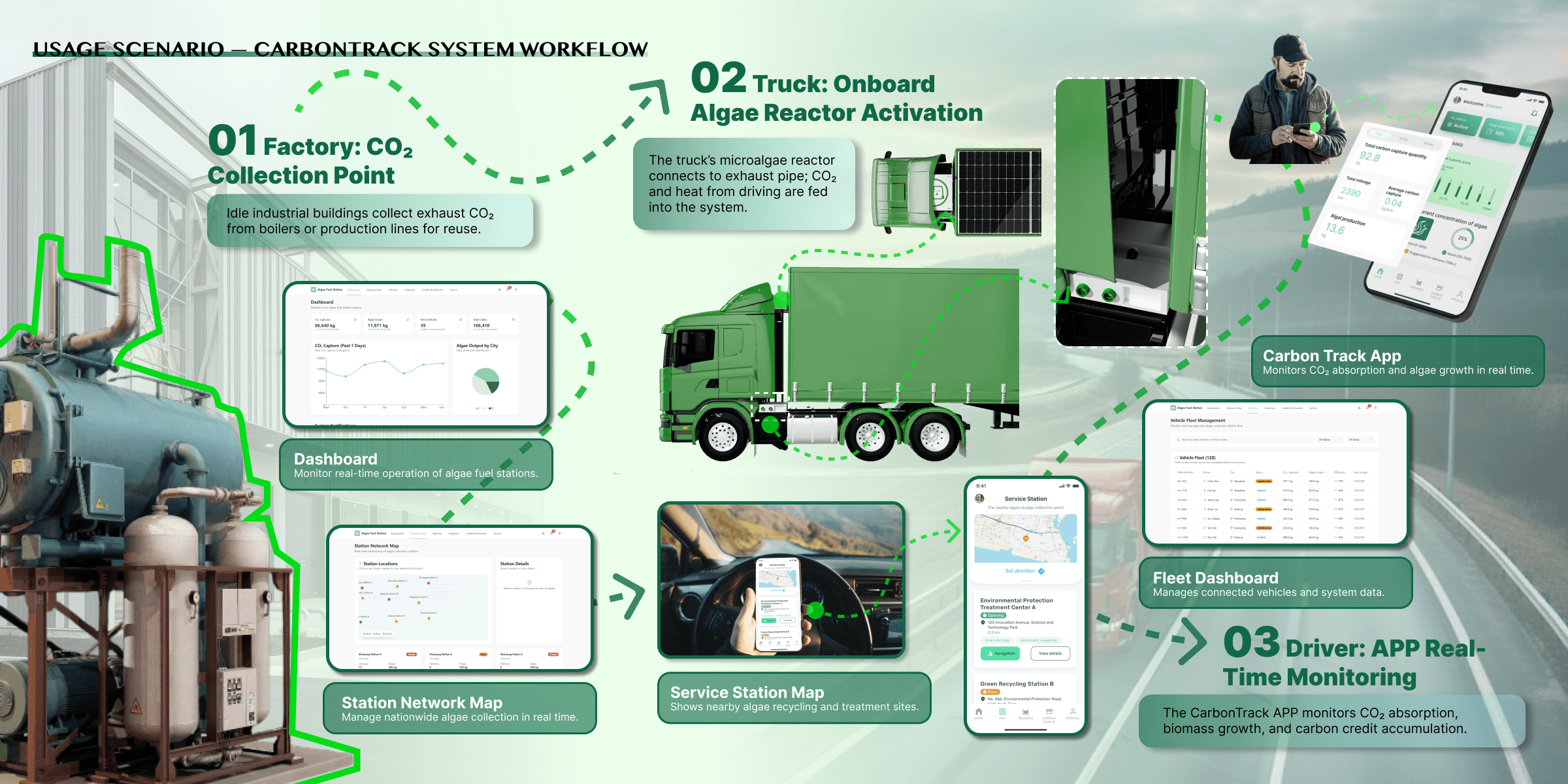
CarbonTrack Workflow & Outcome
Workflow:
Factory / city acts as CO₂ collection and logistics node
Truck captures CO₂ + heat during driving → algae grows
Driver app monitors capture, biomass, and credit accumulation
Value returns to drivers as credits (fuel discounts, maintenance rewards), forming a repeatable incentive loop
Outcome: Flowing Energy designs a closed-loop model where climate action is not an added burden: trucks reduce emissions while working, cities provide infrastructure through reuse, and drivers receive financial resilience through verified carbon value.